The Crucible PDF Act 1: A Comprehensive Analysis
Act 1 of Arthur Miller’s The Crucible‚ readily available as a PDF‚ establishes the play’s tense atmosphere within Reverend Parris’s home in 1692 Salem‚ Massachusetts.
This foundational act introduces key characters and the initial spark of accusations‚ setting the stage for the unfolding tragedy and societal hysteria.
Act 1 of Arthur Miller’s The Crucible serves as a crucial exposition‚ immediately immersing the reader in the fraught environment of Salem‚ Massachusetts‚ in 1692. The play opens not with grand pronouncements‚ but within the private confines of Reverend Samuel Parris’s home‚ a deliberate choice that emphasizes the personal and intimate roots of the ensuing public hysteria.
This initial scene‚ often found in readily accessible PDF versions of the text‚ introduces a community gripped by fear and religious extremism. The mysterious illness afflicting Parris’s daughter‚ Betty‚ and niece‚ Abigail‚ fuels suspicion and sets in motion a chain of events driven by accusation and paranoia. The PDF allows for close reading of Miller’s deliberate staging and dialogue‚ revealing the underlying tensions and power dynamics at play from the very beginning.
It’s a masterful introduction to the themes of reputation‚ power‚ and the dangers of unchecked belief.
Historical Context of the Salem Witch Trials
Understanding the historical backdrop of the 1692 Salem Witch Trials is paramount to interpreting Act 1 of The Crucible‚ often studied through accessible PDF versions of the play. The trials weren’t isolated incidents‚ but stemmed from a confluence of factors: deep-seated religious beliefs‚ socio-economic anxieties‚ and pre-existing superstitions within the Puritan community.
The strict theocratic society of Salem fostered an environment where deviations from religious norms were viewed with intense suspicion. Accusations of witchcraft frequently targeted marginalized individuals‚ often women‚ and served as a means of social control. Miller’s play‚ available as a PDF for detailed analysis‚ doesn’t simply recount history‚ but uses it as a lens to explore universal themes of persecution and injustice.
The context illuminates the fragility of reason in the face of mass hysteria.
Setting the Scene: Reverend Parris’s House
Act 1 of The Crucible‚ frequently accessed as a PDF for study‚ dramatically unfolds within the confined space of Reverend Samuel Parris’s upper bedroom in Salem‚ Massachusetts‚ during the spring of 1692. This setting isn’t merely a location; it’s a symbolic representation of the repressive atmosphere gripping the community.
The small‚ enclosed room emphasizes the lack of privacy and the intense scrutiny under which the inhabitants live. Parris’s house‚ as the focal point of the initial events‚ becomes a microcosm of the larger societal anxieties. The PDF text reveals how this domestic space quickly transforms into a stage for public hysteria and accusation.
The starkness of the setting foreshadows the unfolding drama and the loss of individual freedom.
Characters Introduced in Act 1
Act 1 of The Crucible‚ often studied via PDF versions‚ meticulously introduces a cast of characters central to the unfolding drama. Reverend Samuel Parris‚ a man consumed by fear and reputation‚ immediately establishes the play’s religious and societal tensions.
Abigail Williams‚ a manipulative and vengeful figure‚ emerges as a key instigator of the accusations. Her uncle‚ Reverend Parris‚ is also introduced. Betty Parris‚ seemingly afflicted‚ initiates the hysteria. The enigmatic Tituba‚ Parris’s enslaved servant‚ becomes a focal point of early suspicion.
The PDF text highlights how these initial characterizations lay the groundwork for the power dynamics and conflicts that drive the narrative forward‚ setting the stage for the Salem witch trials.
Reverend Samuel Parris
As presented in Act 1 of The Crucible – frequently accessed as a PDF – Reverend Samuel Parris is portrayed as a deeply insecure and self-concerned minister. He’s preoccupied with his position within the Salem community and fearful of losing his authority.
The PDF text reveals Parris’s anxieties stem from rumors surrounding his daughter‚ Betty‚ and her involvement in forbidden activities in the forest. He prioritizes maintaining a pious image‚ even resorting to questioning his daughter and niece‚ Abigail‚ with a focus on potential scandal.
Parris’s character embodies the rigid and judgmental atmosphere of Salem‚ contributing significantly to the escalating hysteria and the tragic events that follow.
Abigail Williams
Act 1 of The Crucible‚ often studied via PDF versions‚ introduces Abigail Williams as a manipulative and vengeful young woman. The text immediately establishes her as a central figure in the unfolding drama‚ driven by a desire for power and a concealed past.
The PDF reveals Abigail’s leadership role amongst the girls‚ stemming from her involvement in the forbidden forest rituals. She skillfully deflects blame and initiates accusations‚ demonstrating a chilling capacity for deceit.
Her motivations are complex‚ fueled by a past relationship with John Proctor and a fierce determination to avoid consequences for her actions‚ making her a pivotal and dangerous character.
Betty Parris
As presented in Act 1 of The Crucible‚ readily accessible in PDF format‚ Betty Parris is Reverend Parris’s daughter and a crucial catalyst for the play’s events. She’s initially depicted in a state of apparent illness‚ seemingly afflicted and unable to awaken‚ sparking widespread fear and speculation.
The PDF text reveals Betty’s condition is directly linked to her participation in the forbidden dancing in the forest with Abigail and other girls. Her unresponsive state fuels the rumors of witchcraft and sets the stage for the escalating accusations.
Though largely passive throughout Act 1‚ Betty’s illness serves as the initial trigger for the hysteria that grips Salem‚ making her a symbolic figure of the community’s anxieties.

Tituba

As detailed in Act 1 of The Crucible‚ available as a PDF‚ Tituba is Reverend Parris’s enslaved woman from Barbados. She becomes a central figure in the initial investigations due to her knowledge of voodoo and herbal remedies‚ making her a convenient scapegoat for the strange events unfolding in Salem.
The PDF text highlights Tituba’s vulnerability to pressure and fear. Under intense questioning‚ she confesses to consorting with the devil and names others as accomplices‚ driven by a desire to avoid punishment and appease her accusers.
Her confession dramatically escalates the hysteria‚ providing a foundation for the subsequent accusations and solidifying the belief in witchcraft within the community.
The Opening Scene: Suspicion and Fear

The PDF of The Crucible’s Act 1 immediately plunges the audience into an atmosphere of intense suspicion and fear‚ set within the sickroom of Reverend Parris’s daughter‚ Betty. The opening scene establishes a community grappling with unexplained illnesses and anxieties‚ ripe for the spread of hysteria.
As the text reveals‚ the girls’ strange behavior in the forest has sparked rumors of witchcraft‚ fueling the town’s pre-existing religious anxieties. Parris’s concern isn’t solely for Betty’s health‚ but also for his reputation and position within the community.
This initial tension‚ detailed in the PDF‚ foreshadows the escalating accusations and the breakdown of rational thought that will define the play.
The Discovery of the Girls’ Activities in the Forest
As detailed in the PDF of The Crucible’s Act 1‚ the inciting incident revolves around the discovery of the girls’ nocturnal activities in the forest. Reverend Parris discovers Abigail‚ Betty‚ and other girls engaging in forbidden dancing and‚ more disturbingly‚ what appears to be conjuring spirits with Tituba.
This revelation‚ presented in the text‚ immediately raises suspicions of witchcraft within the deeply religious Salem community. The girls’ actions are seen as a direct challenge to the strict Puritanical code‚ and a potential sign of demonic influence.
The PDF highlights how this secret gathering becomes the catalyst for the unfolding hysteria‚ as fear and accusations begin to consume the town.
Abigail’s Role in the Initial Accusations
The PDF version of The Crucible’s Act 1 clearly establishes Abigail Williams as a central figure in initiating the accusations of witchcraft. Faced with the potential exposure of her and the other girls’ activities in the forest‚ Abigail deflects blame and begins naming individuals she accuses of afflicting her and Betty.
As the text reveals‚ Abigail’s motivations are rooted in self-preservation and a desire to avoid punishment. Her manipulative nature and willingness to exploit the prevailing hysteria are evident from the outset.
The PDF demonstrates how Abigail’s initial accusations quickly escalate‚ setting a dangerous precedent for the widespread panic and false charges that characterize the Salem witch trials.
Tituba’s Confession and the Naming of Names
Analyzing the PDF of The Crucible’s Act 1 reveals Tituba’s pivotal role in escalating the crisis through her confession. Under intense pressure from Reverend Hale and Reverend Parris‚ Tituba admits to consorting with the devil and describes fantastical visions.
The text highlights that Tituba’s confession isn’t born of genuine guilt‚ but rather a desperate attempt to save herself from punishment. To further appease her accusers‚ she begins naming others as accomplices‚ initially Goody Good and Goody Osburn.
This act‚ as detailed in the PDF‚ demonstrates the power of coercion and the ease with which accusations spread‚ fueled by fear and a desire for scapegoats within the community.
The Arrival of Reverend Hale
As evidenced in the PDF version of The Crucible’s Act 1‚ the arrival of Reverend Hale marks a significant turning point. Hale‚ an expert in witchcraft from Boston‚ is summoned to Salem to assess the situation and determine if supernatural forces are at play.
The text portrays Hale as a man confident in his knowledge and methods‚ believing he can discern truth from deception. He immediately begins questioning the afflicted girls and attempts to employ logical reasoning to uncover the source of their supposed affliction.
However‚ the PDF reveals Hale’s initial approach is somewhat detached and academic‚ failing to grasp the underlying hysteria gripping Salem‚ setting the stage for future complications.
Hale’s Purpose and Methods
The PDF of The Crucible’s Act 1 clearly outlines Reverend Hale’s primary purpose: to investigate the claims of witchcraft and uphold the religious authority of the court. He arrives believing he possesses the expertise to identify and eradicate any demonic influence.
Hale’s methods‚ as detailed in the text‚ are rooted in established theological practices. He relies heavily on questioning‚ seeking confessions‚ and examining supposed evidence – like the poppet – to validate or disprove accusations.
Initially‚ he favors a rational approach‚ attempting to discern truth through logical inquiry‚ but the PDF foreshadows a shift as he becomes entangled in the escalating hysteria and the pressures of the Salem community.
Initial Examination of Betty Parris

The PDF version of The Crucible’s Act 1 depicts the frantic initial examination of Betty Parris as a central event. Reverend Hale‚ newly arrived‚ begins his investigation with her‚ attempting to diagnose the cause of her apparent affliction – a catatonic state following the forbidden activities in the forest.
Hale employs questioning‚ focusing on potential demonic influence and seeking to elicit a confession. The text reveals his methodical approach‚ probing for signs of witchcraft and attempting to understand the nature of her illness.
This examination‚ as presented in the PDF‚ is crucial in establishing the play’s atmosphere of fear and suspicion‚ and sets the stage for the escalating accusations that follow.
John Proctor’s introduction in Act 1 of The Crucible‚ as detailed in the PDF‚ immediately establishes him as a pragmatic and independent character. He arrives late to the examination of Betty Parris‚ demonstrating a reluctance to engage in the unfolding hysteria.
The text reveals Proctor’s inherent skepticism towards the claims of witchcraft‚ questioning the validity of the girls’ accusations and the authority of Reverend Parris and Reverend Hale. He embodies a voice of reason amidst the growing panic.
His initial interactions highlight his discomfort with the public spectacle and his distrust of the proceedings‚ foreshadowing his eventual conflict with the court and the community.
The Examination of the Girls
Act 1 of The Crucible‚ accessible as a PDF‚ features a pivotal examination of the afflicted girls‚ led by Reverend Hale and Reverend Parris. This scene‚ central to the text‚ showcases the girls’ manipulative behavior and their escalating accusations.
Hale employs questioning techniques to discern truth from fabrication‚ while Parris is primarily concerned with protecting his reputation and the church’s standing. The girls‚ led by Abigail Williams‚ exploit the situation‚ feigning possession and naming alleged witches.
This examination demonstrates the power dynamics at play and the ease with which fear and suspicion can be weaponized‚ driving the narrative forward into the heart of the Salem witch trials.
The Significance of the Poppet
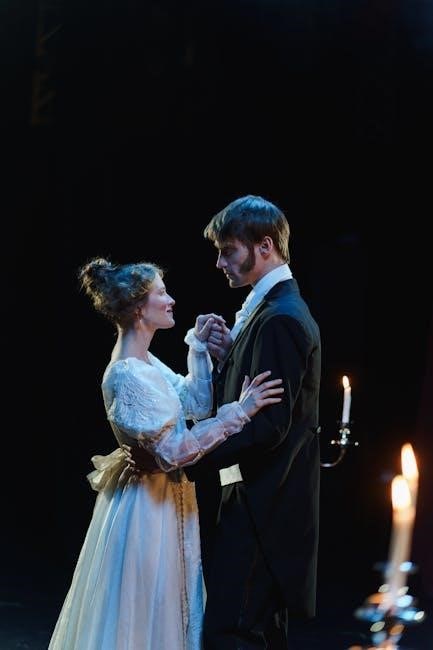
Within Act 1 of The Crucible‚ readily available as a PDF‚ the discovery of the poppet – a doll – held by Mary Warren becomes a crucial turning point. Cheever’s investigation centers on this object‚ as Abigail claims it was used to send her spirit out to harm her.
The poppet‚ gifted to Elizabeth Proctor‚ serves as tangible evidence‚ albeit fabricated‚ linking her to witchcraft. This incident highlights the absurdity of the accusations and the willingness of the girls to invent evidence to condemn innocent individuals.
The poppet’s significance lies in its ability to escalate the hysteria and directly implicate Elizabeth‚ setting in motion a chain of events that will lead to her arrest and trial.
Mary Warren and the Poppet
In Act 1 of The Crucible‚ accessible as a PDF‚ Mary Warren’s connection to the poppet is pivotal. She initially presents the doll as a harmless gift from Elizabeth Proctor‚ but under intense questioning by Cheever and the increasingly manipulative Abigail‚ her story unravels;
Mary’s timid nature and desire to avoid punishment make her susceptible to the other girls’ influence. She reluctantly admits to pricking the poppet’s needle‚ unknowingly mirroring Abigail’s staged injury‚ thus providing “evidence” of witchcraft.
This confession demonstrates Mary’s vulnerability and her descent into the collective hysteria‚ highlighting how easily individuals can be coerced into false accusations during times of mass panic.
Cheever’s Investigation
As detailed in the PDF version of The Crucible’s Act 1‚ Cheever arrives at the Proctor home as a court official tasked with executing search warrants. His investigation centers around the discovery of a poppet in Elizabeth Proctor’s possession‚ linked to the afflicted girls’ strange behavior.
Cheever’s methodical‚ yet increasingly frantic‚ questioning reveals Mary Warren’s admission of pricking the poppet with a needle. This seemingly insignificant detail becomes damning “evidence” in the eyes of the court‚ fueled by Abigail’s accusations.
His rigid adherence to procedure and growing belief in the girls’ claims demonstrate the escalating power of the court and the pervasive fear gripping Salem.
John Proctor and Abigail’s Past Relationship
Act 1 of The Crucible‚ as presented in the PDF‚ dramatically unveils the illicit affair between John Proctor and Abigail Williams. This past relationship forms a crucial undercurrent of tension and suspicion throughout the act.
Through pointed questioning by Reverend Hale and Proctor’s own guarded responses‚ the audience learns of the power imbalance and Abigail’s manipulative nature. She harbors lingering feelings for Proctor and seeks to regain his attention‚ fueling her vengeful actions.
The revelation of their past is pivotal‚ establishing Abigail’s motive for falsely accusing Elizabeth Proctor and highlighting the destructive consequences of repressed desires and societal hypocrisy.
The Rising Tension and Accusations
Act 1 of The Crucible‚ detailed in the PDF version‚ witnesses a rapid escalation of tension as accusations begin to fly amongst the girls. Initially focused on Tituba’s supposed witchcraft‚ the accusations quickly broaden‚ fueled by fear and Abigail’s manipulative influence.
The atmosphere in Reverend Parris’s house becomes increasingly fraught with suspicion‚ as the girls‚ seemingly possessed‚ name various townspeople. This creates a climate of paranoia and distrust‚ where anyone can become a target.
The rising tension culminates in a chaotic scene‚ demonstrating the power of mass hysteria and the fragility of reason within the community‚ setting the stage for the trials to come.
Elizabeth Proctor’s Name Mentioned
A pivotal moment in Act 1 of The Crucible‚ as documented in the PDF‚ arrives when Abigail Williams shockingly accuses Elizabeth Proctor of witchcraft. This accusation‚ delivered during the increasingly frantic examination of the girls‚ dramatically shifts the play’s trajectory.
The mention of Elizabeth’s name is not random; it reveals Abigail’s long-held resentment and desire for John Proctor‚ stemming from their previous affair. This accusation is a calculated move to eliminate Elizabeth and claim John for herself.
The revelation throws John Proctor into turmoil‚ highlighting the personal stakes within the larger context of the Salem witch trials and foreshadowing the devastating consequences to come.
Hale’s Growing Concerns
As Act 1 of The Crucible‚ accessible in PDF format‚ progresses‚ Reverend Hale‚ the expert in witchcraft‚ begins to exhibit increasing unease. Initially confident in his methods and purpose‚ Hale’s certainty wavers as he observes the girls’ behavior and the escalating accusations.
He starts to question whether the girls are genuinely afflicted by witchcraft or if other forces are at play‚ hinting at possible deception. Hale’s intellectual approach clashes with the fervent religious atmosphere and the readily accepted spectral evidence.
This growing doubt foreshadows his later disillusionment and eventual struggle with the injustice of the trials‚ marking a crucial turning point in his character arc.
The Dynamics of Power and Authority
Act 1 of The Crucible‚ often studied via PDF versions‚ vividly portrays the complex interplay of power and authority in Salem. Reverend Parris embodies a fragile authority‚ concerned with his reputation and fearful of losing his position within the community.
The emerging power of the court‚ represented through figures like Deputy Governor Danforth (though not directly present in Act 1)‚ looms large‚ promising swift and severe judgment. Abigail Williams skillfully manipulates this power dynamic‚ leveraging accusations to control others.
This act establishes how easily fear and religious fervor can be exploited to consolidate authority and suppress dissent‚ setting the stage for the play’s tragic events.
Parris’s Authority
Within Act 1 of The Crucible‚ readily accessible in PDF format‚ Reverend Samuel Parris’s authority is depicted as insecure and self-serving. He’s deeply concerned with maintaining his position and reputation within Salem‚ prioritizing his public image above genuine spiritual guidance.
Parris’s authority stems from his ministerial role‚ yet he’s constantly seeking validation and fearing criticism. The discovery of his daughter Betty and other girls’ strange behavior threatens his standing‚ prompting him to summon Reverend Hale.
His attempts to control the situation reveal a weakness‚ highlighting how easily his authority can be undermined by the unfolding events and the growing hysteria within the community.
The Court’s Influence
Even in Act 1 of The Crucible‚ available as a PDF‚ the looming influence of the court is palpable‚ though not yet fully realized. Deputy Governor Danforth isn’t present‚ but his authority is invoked as the ultimate arbiter of justice in Salem.
The very mention of the court instills fear and compels characters like Tituba to confess and name others‚ demonstrating its power to shape narratives and dictate outcomes. This initial display foreshadows the court’s later‚ more overt role in perpetuating the witch hunt.
The expectation of the court’s judgment hangs heavy‚ influencing the actions and testimonies of those involved‚ and setting a precedent for the escalating accusations to come.
Themes Explored in Act 1
Act 1 of The Crucible‚ accessible as a PDF‚ powerfully introduces several central themes. Hysteria and mass panic are immediately apparent‚ fueled by fear of the unknown and the girls’ accusations. This quickly spirals‚ demonstrating how easily societal order can crumble under irrational belief.
Reputation and social standing are also crucial; characters are deeply concerned with how they are perceived by others‚ influencing their actions and willingness to confess. Abigail’s motivations are rooted in protecting her name.
The act also hints at themes of power‚ authority‚ and the dangers of religious extremism‚ laying the groundwork for the play’s complex exploration of these ideas.
Hysteria and Mass Panic
Act 1 of The Crucible‚ often studied via PDF versions‚ vividly portrays the rapid descent into hysteria and mass panic within Salem. The girls’ strange behavior in the forest‚ initially a playful transgression‚ quickly escalates into accusations of witchcraft‚ igniting widespread fear.
This panic isn’t logical; it’s driven by superstition‚ repressed desires‚ and the power dynamics within the community. Reverend Parris’s concern for his reputation and the town’s religious fervor contribute to the escalating hysteria.
The act demonstrates how easily unfounded accusations can spread‚ fueled by fear and a desire to find scapegoats‚ ultimately consuming the town in a wave of irrationality.
Reputation and Social Standing
Act 1 of The Crucible‚ frequently accessed as a PDF resource‚ highlights the paramount importance of reputation and social standing in Puritan Salem. Characters are deeply concerned with how they are perceived by others‚ influencing their actions and motivations.
Reverend Parris’s anxieties stem from protecting his position within the community‚ while Abigail Williams manipulates the situation to safeguard her own name. John Proctor’s internal conflict arises from the potential damage to his respected standing should his past affair be revealed.
The play demonstrates how easily reputations can be tarnished by accusations‚ and the devastating consequences of losing social standing in a rigid‚ judgmental society.
Analyzing Key Quotes from Act 1
Examining Act 1 of The Crucible‚ often studied via PDF versions‚ reveals powerful quotes illuminating the play’s central themes. Reverend Parris’s line‚ “I have trouble enough with these girls‚” establishes his self-preservation and fear of scandal.

Abigail’s declaration‚ “I want to live‚ Good Proctor!” exposes her desperation and willingness to accuse others. Tituba’s confession‚ fueled by pressure‚ demonstrates the power of forced confessions.
Proctor’s skeptical questioning‚ “Wherefore is this proceeding?” foreshadows his challenge to the court’s authority. These quotes‚ readily available within the text‚ showcase the rising tension and foreshadow the tragic events to come.
The Cliffhanger Ending of Act 1
Act 1 of The Crucible‚ frequently accessed as a PDF for study‚ concludes with a dramatic and unsettling cliffhanger. The shocking mention of Elizabeth Proctor’s name by Abigail Williams during the examinations throws the entire situation into turmoil.
This accusation‚ seemingly motivated by jealousy and a past affair with John Proctor‚ immediately places Elizabeth under suspicion and sets the stage for escalating conflict.
The text ends with Reverend Hale’s arrival‚ promising a more formal investigation‚ but also hinting at the potential for injustice and mass hysteria. This abrupt ending leaves the audience anxiously anticipating the consequences of Abigail’s vengeful act.
PDF Availability and Online Resources
Finding a PDF version of The Crucible Act 1 is remarkably easy‚ facilitating student study and literary analysis. Numerous websites offer free downloads of the text‚ including educational platforms and online libraries.
Resources like Everbind Anthologies provide accessible versions‚ while many school districts offer the play’s PDF through their digital learning systems.
Beyond the text itself‚ online resources abound with character analyses‚ plot summaries‚ and historical context regarding the Salem Witch Trials. Websites dedicated to Arthur Miller’s work also provide valuable insights‚ enhancing comprehension of this pivotal Act 1.
Further Study and Critical Analysis
Deeper exploration of The Crucible‚ beginning with Act 1’s PDF‚ reveals layers of symbolism and allegorical meaning. Examining Miller’s use of language and dramatic structure unveils the play’s commentary on McCarthyism and societal pressures.
Critical essays often focus on the themes of hysteria‚ reputation‚ and power dynamics established in this initial act. Analyzing the characters’ motivations – Abigail’s manipulation‚ Parris’s self-preservation – provides richer understanding.
Comparing the play to historical accounts of the Salem Witch Trials offers valuable context‚ while considering its relevance to contemporary issues fosters insightful discussion and continued scholarly analysis of this enduring work.